

Citric acid South Africa food manufacturers source is one of the most widely used food-grade additives in the world — and for good reason. It is safe, effective, naturally derived and performs multiple functions across beverages, confectionery, dairy, meat processing and more.
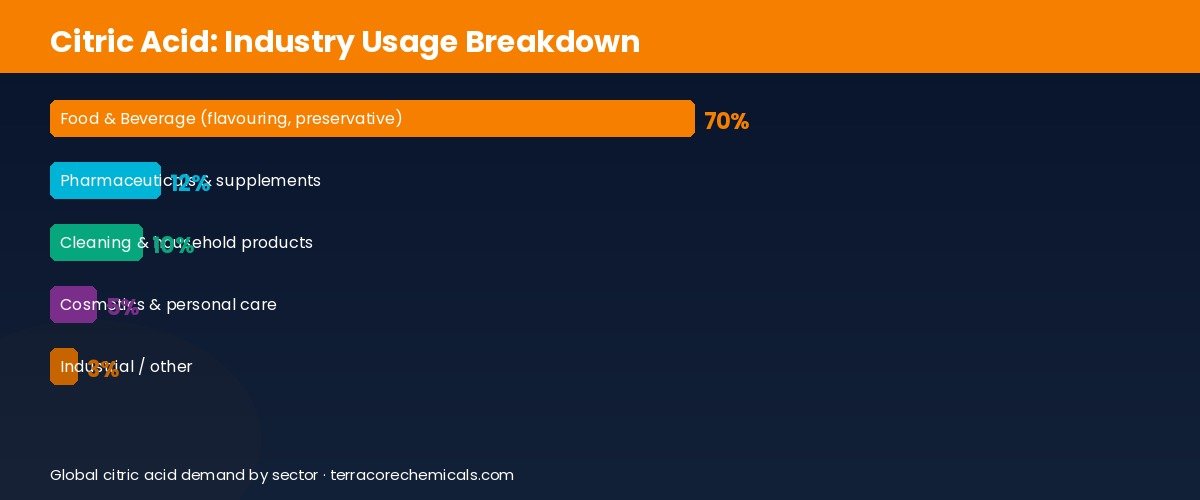
This guide explains the key roles citric acid plays in food and beverage manufacturing and what buyers and formulators in South Africa should know when sourcing it.
What is Citric Acid?
Citric acid (E330) is a weak organic acid found naturally in citrus fruits. Commercial citric acid is produced by fermentation of glucose or sucrose using Aspergillus niger moulds. It is available as a white crystalline powder (anhydrous) or as citric acid monohydrate.
| Form | Water content | Common Use |
|---|---|---|
| Anhydrous (dry) | None | Dry mixes, powdered beverages, confectionery |
| Monohydrate | ~8.5% | Liquid beverages, pharmaceuticals, cleaning |
Key Uses in Food and Beverage Manufacturing
1. Acidulant and pH Regulator
Citric acid is the acidulant of choice for carbonated soft drinks, fruit juices, sports drinks and energy drinks. It lowers pH quickly and consistently, enhancing tartness and balancing sweetness. Typical use levels in beverages range from 0.1% to 0.5% by weight.
2. Preservative and Shelf-Life Extender
By reducing pH, citric acid creates an environment hostile to microbial growth. It is widely used in canned goods, jams and sauces as part of a preservation system, usually alongside sodium benzoate or potassium sorbate.
3. Chelating Agent in Dairy and Meat
Citric acid chelates (binds) metal ions that catalyse oxidation and rancidity. In processed meats, it extends colour and flavour stability. In dairy, it prevents mineral precipitation in UHT-treated products and is used in cheese manufacturing to lower pH before rennet addition.
4. Flavour Enhancer in Confectionery
Hard candies, gummy sweets and sour coatings all depend on citric acid for their characteristic tartness. Sour-coated products typically use fine-crystal citric acid anhydrous blended with sugar for a fast, intense acid hit.
5. Emulsification and Texture in Processed Foods
In combination with trisodium citrate (sodium citrate), citric acid is used as an emulsifying salt in processed cheese and cream cheese spreads, creating a smooth, meltable texture.
Food Safety and Regulatory Status: Citric Acid South Africa
Citric acid (E330) is listed as a permitted food additive under South Africa’s Foodstuffs, Cosmetics and Disinfectants Act (Act 54 of 1972) and its associated regulations. It is also approved by the EU, FDA (GRAS status), and Codex Alimentarius, making it suitable for products destined for export markets.
When sourcing citric acid for food use, always request:
- Certificate of Analysis (COA) confirming food-grade purity (BP/FCC grade)
- Safety Data Sheet (SDS)
- Declaration that the product is non-GMO (if required by your customer)
- Halal or Kosher certification (where applicable)
Sourcing Citric Acid in South Africa
Citric acid is imported into South Africa primarily from China and Europe. Lead times vary by origin and season; domestic stockholding by reputable suppliers is the most reliable way to ensure consistent availability. Compare suppliers on grade (FCC/BP), COA quality, packaging options (25 kg bags, bulk) and lead times — not price alone.
Terracore Chemicals supplies food-grade citric acid (anhydrous and monohydrate) with full COA and SDS documentation. We serve food manufacturers, beverage producers and contract formulators across South Africa.
For full technical specifications and safety information, refer to the citric acid properties and safety data available from PubChem, the open chemistry database maintained by the US National Library of Medicine.
Ready to request a quote? Contact the Terracore Chemicals team for pricing, availability and documentation on any of our bulk chemicals. We supply industrial and food-grade chemicals across South Africa with fast lead times and full compliance documentation.